- Brightcone.ai
- Posts
- DeepSeek-V3.2-Exp • Diag2Diag Advances Reliability in Fusion Reactor Control • State-Level AI Safety Laws
DeepSeek-V3.2-Exp • Diag2Diag Advances Reliability in Fusion Reactor Control • State-Level AI Safety Laws
10-04-25 | Content Week-35

Brightcone AI Team
October 04, 2025

🔥 HOT THIS WEEK
🧠 Thinking Machines Debuts Tinker, Democratizing AI Fine-Tuning
Thinking Machines Lab (co-founded by ex-OpenAI leaders) unveiled Tinker, a tool that simplifies model fine-tuning for researchers and developers. It aims to let users experiment with open models (e.g. Llama, Qwen) without needing deep infrastructure or operations expertise.
📍 Impact: ★★★★☆ — Could lower the barrier to participation in frontier AI research and spur more open innovation.
Source: Wired / Times of India WIRED+1
⚙️ DeepSeek Launches LLM Optimized for China’s Native Hardware Stack
DeepSeek released DeepSeek-V3.2-Exp, a large language model built from day one to run on Chinese accelerators (Huawei Ascend, Cambricon, Hygon) and their native runtimes. It also integrates a sparse attention mechanism to reduce memory usage for long contexts.
📍 Impact: ★★★★☆ — A bold step toward AI hardware sovereignty and reducing dependence on NVIDIA/CUDA.
Source: Tom’s Hardware Tom's Hardware
🔬 SCIGEN Tool Enables Materials Discovery with Structure Constraints
MIT researchers introduced SCIGEN, a method to steer generative models when designing advanced materials (e.g. for quantum computing) by imposing structural and chemical constraints. This helps ensure the AI doesn’t just generate plausible compounds, but ones meeting physical design rules.
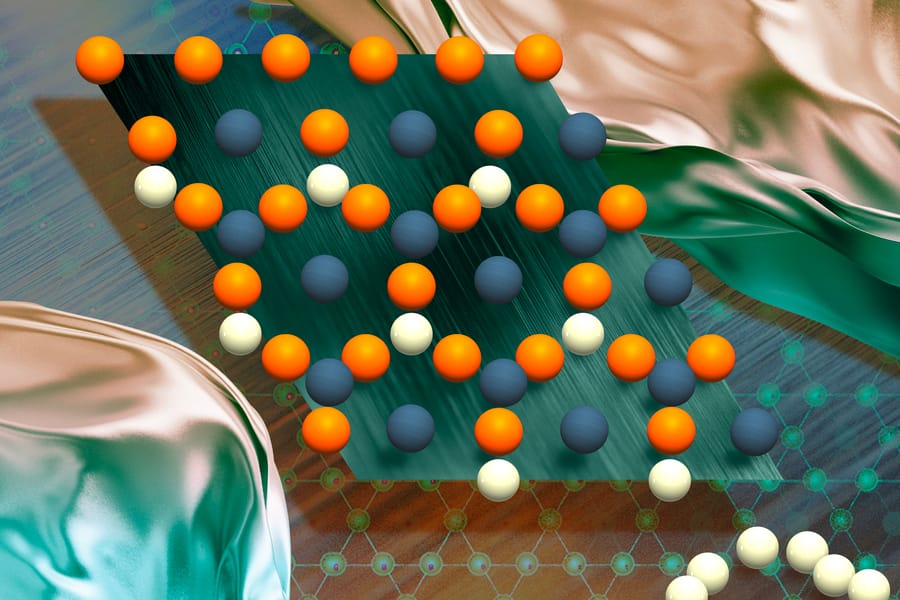
📍 Impact: ★★★★☆ — Bridges the gap between generative AI and practical scientific discovery.
Source: MIT News MIT News
🔬 AI System Diag2Diag Advances Reliability in Fusion Reactor Control
Researchers at Princeton and the U.S. Department of Energy unveiled Diag2Diag, an AI framework that reconstructs high-resolution diagnostic signals from degraded sensors in real time. This helps maintain stability and control in plasma systems—critical for reliable fusion energy.
📍 Impact: ★★★★☆ — AI is moving from “assistive” to “critical infrastructure” roles in high-stakes science.
Source: Innovation News Network Innovation News Network
📑 California Passes First State-Level AI Safety Law
Governor Newsom signed legislation imposing safety, reporting, and oversight requirements on powerful AI systems. Entities exceeding compute thresholds must publicly disclose safety protocols, report incidents, and adhere to whistleblower protections.

📍 Impact: ★★★☆☆ — States are stepping in where federal regulation lags, creating patchwork risk for developers.
Source: AP News AP News
🛠 TOOL OF THE WEEK
SCANAR + AIDOC (Horizon-Scanning Automation Tools)
Researchers recently published two open-source tools — SCANAR for automated retrieval & deduplication of news data, and AIDOC for AI-assisted ranking/filtering of items by relevance. Together they aim to streamline horizon scanning in domains like healthcare and technology, cutting manual triage by ~60%.
📍 Why it’s niche: Most AI coverage is on models; these tools address the upstream challenge of surfacing what to pay attention to.
Source: arXiv / public research arXiv
🤖 AI FOR BEGINNERS
LABIIUM — AI-Enhanced Lab Instrument Automation
LABIIUM is a system that combines LLMs with instrument control to create zero-configuration measurement workflows. It acts as a bridge between experimental hardware and software environments, auto-generating control scripts and enabling non-experts to run experiments more efficiently.

📍 Why it’s niche: Instead of chatbots or general assistants, LABIIUM sits at the interface of AI + physical science workflows.
Source: arXiv paper
😂 THIS WEEK IN MEMES
